
Imagine a villa rising from the desert not over months of scaffolding, dust and noise — but in a matter of days, printed layer by layer like a sculpture made of stone. No formwork. No army of workers pouring concrete by hand. Just a robotic arm tracing the exact shape of your dream home with millimetre precision.
This isn’t a concept from a distant future. It’s happening right now, across the MENA region and Africa — and Inoventive 3D is at the forefront of making it real.
In this guide, we’ll walk you through what concrete 3D printing is, why the Middle East and Africa have become the world’s most exciting testing ground for it, and how Inoventive 3D brings 3D printed villas and buildings to life from the UAE to the wider region.
The Construction Revolution Has Already Begun
For over a century, we’ve built the same way: bricks, blocks, beams and bare hands. But the world is changing faster than traditional construction can keep up with. Cities are expanding. Labour is scarce. Costs are climbing. And the planet needs us to build with a far lighter footprint.
Enter concrete 3D printing — also called additive construction or 3D construction printing (3DCP). It’s a method where a computer-controlled printer extrudes a specially engineered concrete mix in continuous layers, following a digital blueprint, until an entire structure takes shape.
The numbers tell a remarkable story. The Middle East and Africa 3D concrete printing market generated tens of millions of dollars in 2025 and is forecast to grow at a blistering compound annual rate of more than 40% through 2033 — one of the fastest-growing construction technology sectors anywhere on earth. The UAE, in particular, is expected to lead the region in growth.
The reason is simple: this technology solves the exact problems the region is wrestling with — speed, cost, sustainability and a chronic housing shortage.
Lorem ipsum dolor sit amet, consectetur adipiscing elit. Ut elit tellus, luctus nec ullamcorper mattis, pulvinar dapibus leo.
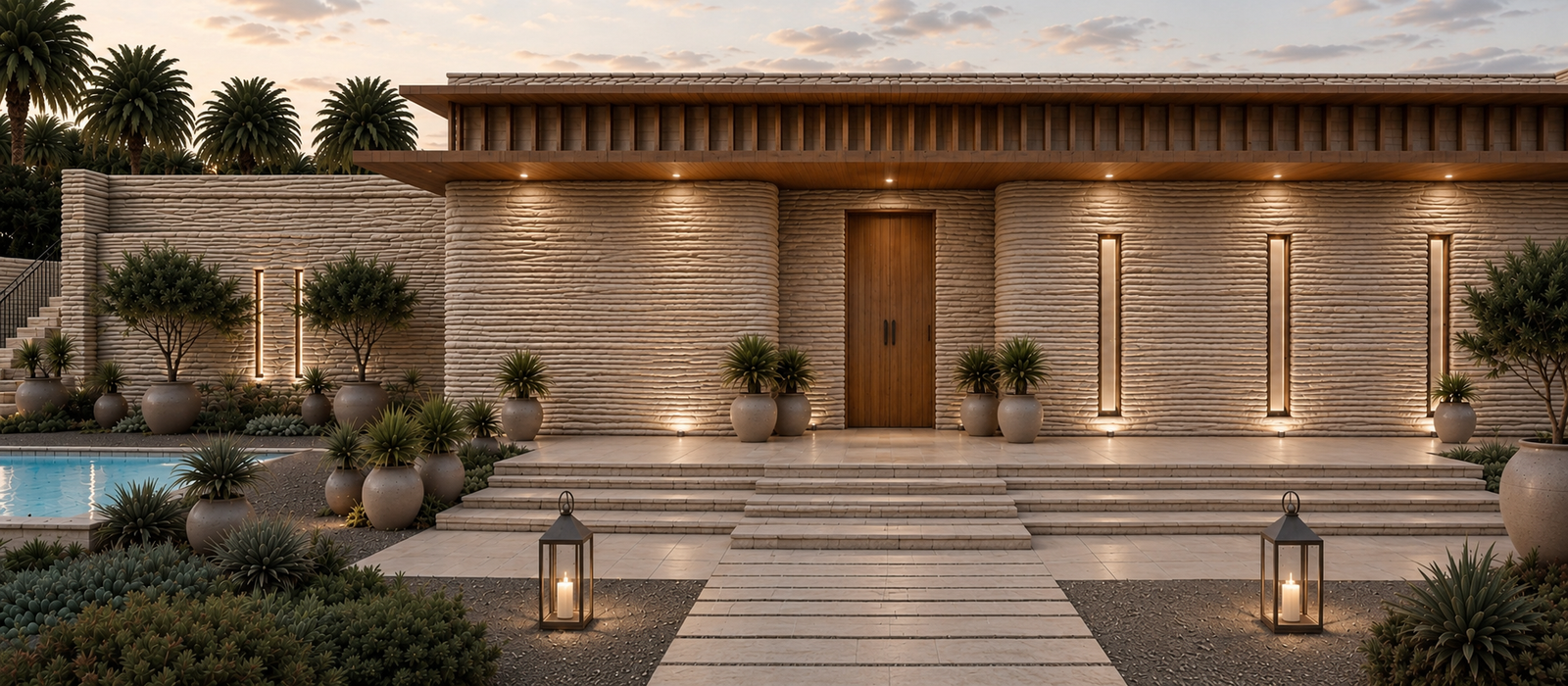
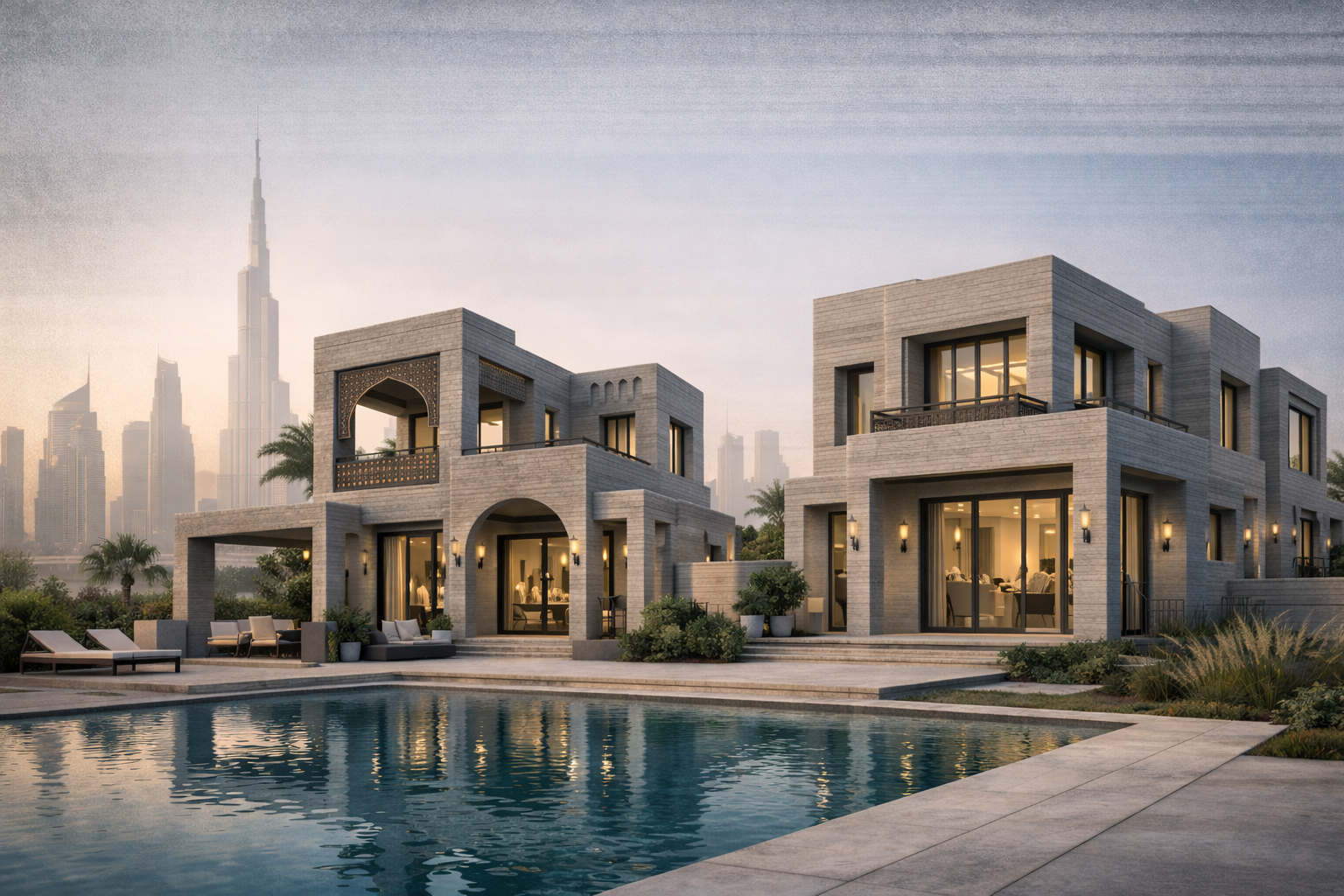
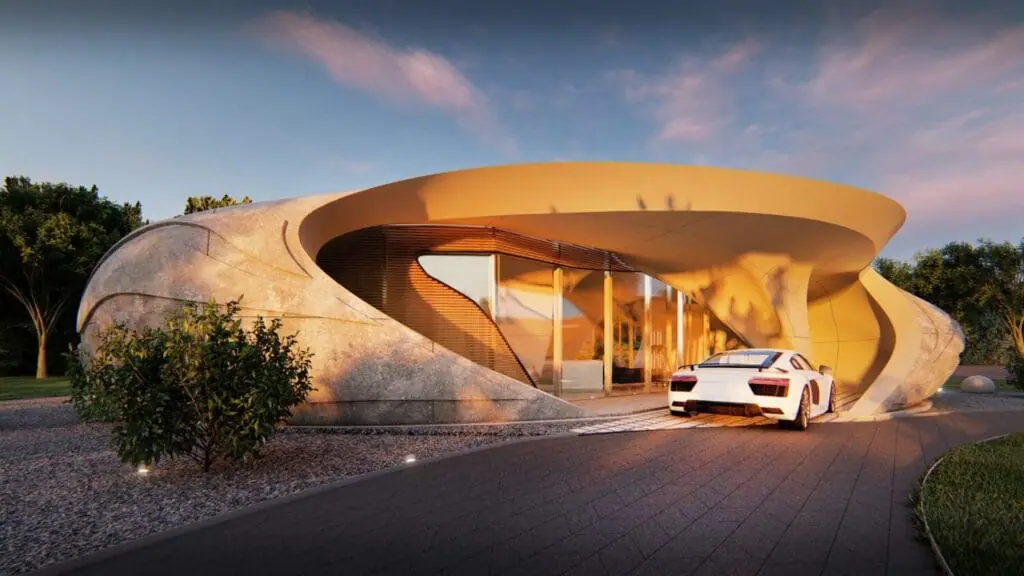
Why MENA & Africa Are the Perfect Launchpad for 3D Printed Buildings
Dubai’s bold 2030 vision
Few places on earth have embraced this technology as ambitiously as Dubai. Under the Dubai 3D Printing Strategy, the emirate set a landmark goal: a full quarter of all new buildings in Dubai should incorporate 3D printing technology by 2030. The strategy explicitly targets cost reductions of 50–70% and labour savings of up to 80% on suitable projects.
Dubai backed up the ambition with action — it became home to what was, at its unveiling, the world’s largest 3D printed building: a two-storey administrative structure printed in a fraction of conventional time, using only a handful of on-site workers. That single project proved a powerful point: 3D printing isn’t just for novelty pods and art pieces. It can deliver real, usable, permanent buildings.
Africa’s housing opportunity
Across the African continent, the story is about scale and need. Rapid urbanisation means tens of thousands of people move into cities every single day, and the housing supply simply can’t keep pace — some nations face shortfalls running into the millions of homes.
Pioneering projects have already shown what’s possible: Africa’s first 3D printed homes and the world’s first 3D printed school were delivered using additive construction, with house walls printed in as little as 12 hours and carbon emissions cut by up to 70% compared to conventional building. In Kenya, one of the world’s largest 3D printed affordable housing communities demonstrated that printing dozens of homes on a single site is not only feasible — it’s faster and cleaner.
The message is unmistakable: from luxury villas in the Gulf to affordable communities across the continent, concrete 3D printing in Africa and MENA has moved from experiment to industry.
What Exactly Is Concrete 3D Printing?
Let’s demystify it. At its heart, concrete 3D printing works on the same principle as the desktop 3D printers you may have seen — but at architectural scale.
- Design — An architect or engineer creates a digital 3D model of the structure. Because the printer follows code, curved walls, organic shapes and intricate facades cost no more to print than a straight wall. Design freedom is almost unlimited.
- Material — A specially formulated “ink” (a high-performance concrete mix) is engineered to flow smoothly through the nozzle, then harden quickly enough to support the next layer — while standing up to extreme desert heat, humidity and time.
- Printing — A gantry or robotic-arm printer extrudes the concrete layer by layer, tracing the building’s walls with extraordinary precision. No moulds, no formwork, almost no waste.
- Finishing — Once the structure is printed, teams add roofing, windows, doors, electrics, plumbing and finishes — turning the printed shell into a complete, livable building.
The result is a structure that is stronger, lighter, more precise and far quicker to build than its traditionally constructed counterpart.
Inoventive 3D: Engineering 3D Printed Villas & Buildings for the Entire MENA Region
This is where Inoventive 3D comes in. As one of the region’s most established large-format 3D printing innovators, Inoventive 3D brings the full power of additive construction to clients across the UAE and the wider MENA landscape.
Here’s what sets Inoventive 3D apart.
End-to-end capability — from concept to handover
Inoventive 3D doesn’t just print walls. The team supports the entire journey: design consultation, structural engineering, material selection, on-site or off-site printing, and final finishing. Whether you’re a private client commissioning a one-of-a-kind villa or a developer planning a community, the workflow is built to be seamless.
Bespoke 3D printed villas
Want a home that no one else on earth has? Because Inoventive 3D builds from a digital model, you’re not limited to boxy, repetitive layouts. Flowing curves, sculptural facades, integrated landscaping features, custom interior partitions — designs that would be punishingly expensive with traditional formwork become genuinely achievable. Your villa becomes a statement, not a template.
Commercial & community-scale buildings
Beyond residential villas, the technology extends to offices, retail spaces, pavilions, community housing, hospitality structures and architectural landmarks. For developers and government entities chasing aggressive timelines and sustainability targets, 3D printing offers a compelling path forward.
Built for the region’s climate
A villa in the MENA region must endure searing summers, sudden humidity and decades of sun. Inoventive 3D’s approach is engineered with the local environment in mind — durable, weather-resistant structures designed to last in exactly the conditions our region is known for.
Regional reach
While rooted in the UAE — the beating heart of the region’s 3D printing ambitions — Inoventive 3D’s vision spans the entire MENA region and into Africa, supporting the broader movement toward faster, smarter, greener construction across the Middle East and the continent.
The Real-World Benefits: Why Choose 3D Printed Construction?
Speed that changes everything
Walls that take days or weeks conventionally can be printed in hours. Projects that once spanned months can be compressed dramatically — getting you into your villa, or your tenants into their homes, far sooner.
Lower costs
With far less manual labour, minimal material waste and no expensive formwork, total build costs can fall significantly. Regional strategies have cited construction cost reductions of up to 50–70% on suitable projects.
A lighter footprint
Additive construction uses only the material it needs, slashing waste. Combined with modern low-carbon concrete mixes, the technology can cut a building’s carbon footprint by as much as 70% versus conventional methods — a major win for sustainability goals across MENA and Africa.
Limitless design freedom
Curves cost the same as straight lines. Complexity is “free.” Architects are liberated to design forms that were previously impractical or unaffordable.
A safer, smarter site
Fewer workers exposed to heat, heights and heavy manual labour. More automation, more precision, fewer errors — and new, skilled, future-facing jobs for operators, engineers and technicians.
Durability where it counts
Engineered concrete structures designed to withstand the region’s heat, humidity and time — built to endure, not just to impress.
Where 3D Printing Is Headed in MENA & Africa
This is just the beginning. As building codes mature, materials improve and printers get faster and cheaper, expect 3D printing to move from pioneering projects to mainstream practice.
Picture entire master-planned communities printed in record time. Disaster-relief housing deployed in days. Iconic landmarks shaped in ways no mould could ever allow. Affordable homes closing the housing gap across Africa. Luxury villas redefining what a Gulf residence can be.
With governments backing the technology, demand surging and the regional market growing at one of the fastest rates in the world, the trajectory is clear — and Inoventive 3D is positioned right at the leading edge of it.
Build the Future With Inoventive 3D
Concrete 3D printing isn’t a glimpse of tomorrow anymore. It’s a tool you can use today to build faster, smarter, greener and more beautifully than ever before.
Whether you’re dreaming of a one-of-a-kind 3D printed villa, planning a commercial or community development, or simply curious about how additive construction could transform your next project anywhere in the MENA region or Africa — Inoventive 3D is ready to bring it to life, layer by layer.
Ready to print the future? Contact Inoventive 3D today for a consultation and discover what’s possible when imagination meets innovation.
Frequently Asked Questions
Is concrete 3D printing strong enough for real, permanent buildings?
Yes. The engineered concrete used in additive construction is designed for structural performance, and 3D printed buildings — including multi-storey structures — are already permitted, occupied and in everyday use around the world, including in the UAE.
How much faster is a 3D printed villa compared to traditional construction?
The printing of walls can be completed in a fraction of the time — sometimes a single structure’s shell in days rather than weeks. Overall project timelines are typically compressed significantly, though finishing, MEP and roofing still follow conventional schedules.
Is 3D printed construction cheaper?
Generally, yes — thanks to reduced labour, minimal waste and the elimination of formwork. Regional strategies have pointed to potential cost savings of up to 50–70% on suitable projects, though final figures depend on design and scale.
Is it environmentally friendly?
Very. Additive construction uses only the material it needs and pairs well with low-carbon concrete mixes, with documented carbon-footprint reductions of up to 70% versus traditional building methods.
Can I get a custom design, or only standard models?
Fully custom. Because everything is printed from a digital model, unique, curved and sculptural designs are not only possible but often easier and more cost-effective than with conventional construction.
Does Inoventive 3D work across the whole MENA region and Africa?
Inoventive 3D is based in the UAE — the regional hub for 3D printing innovation — with a vision spanning the entire MENA region and Africa. Reach out to discuss your specific location and project.